BPC-157 / TB-500: The Research-Grade Peptide Stack Redefining Recovery Science
In the rapidly evolving landscape of peptide research, few combinations have attracted as much scientific attention as BPC-157 and TB-500. In fact, the BPC-157/TB-500 stack is recognized for its potential across research domains. Together, they represent one of the most studied dual-peptide stacks in preclinical research — and for good reason.
What Is BPC-157?
BPC-157 (Body Protection Compound-157) is a synthetic pentadecapeptide derived from a protective protein found in gastric juice. With a sequence of 15 amino acids, it has been the subject of extensive preclinical studies examining its role in:
- Tissue repair and wound healing at the cellular level
- Tendon and ligament recovery mechanisms
- Gastrointestinal tract protection and mucosal integrity
- Angiogenesis — the formation of new blood vessels to support tissue regeneration
- Neuroprotective pathways in preclinical neurological models
Research suggests BPC-157 may upregulate growth hormone receptors and modulate nitric oxide synthesis, contributing to its observed regenerative properties in laboratory settings.
What Is TB-500?
TB-500 is a synthetic version of Thymosin Beta-4 (Tβ4), a naturally occurring peptide found in virtually all human and animal cells. It plays a critical role in studies involving BPC-157/TB-500, among other research applications.
- Actin regulation — essential for cell structure, migration, and repair
- Anti-inflammatory response modulation in tissue models
- Vascular and cardiac tissue research, including endothelial cell migration
- Muscle fiber repair and satellite cell activation in preclinical studies
- Systemic recovery pathways that complement localized repair mechanisms
TB-500’s ability to travel through the bloodstream makes it a subject of interest for systemic, rather than localized, research applications.
Why Researchers Study BPC-157 and TB-500 Together
The BPC-157 / TB-500 combination is frequently explored in research due to their complementary mechanisms of action. Moreover, ongoing investigations into BPC-157/TB-500 aim to reveal additional synergistic benefits for recovery and repair science.
| Property | BPC-157 | TB-500 |
| Primary Action | Localized tissue repair | Systemic recovery pathways |
| Key Mechanism | Angiogenesis, NO modulation | Actin regulation, cell migration |
| Research Focus | GI, tendon, ligament, neuro | Muscle, vascular, anti-inflammatory |
| Delivery Format | Injectable / Nasal Spray | Injectable / Nasal Spray |
When studied together, preclinical models suggest a synergistic effect — BPC-157 targeting localized repair while TB-500 supports broader systemic recovery signaling. Consequently, the BPC-157/TB-500 stack holds growing importance in research settings seeking to elucidate the mechanisms of advanced peptide therapies.
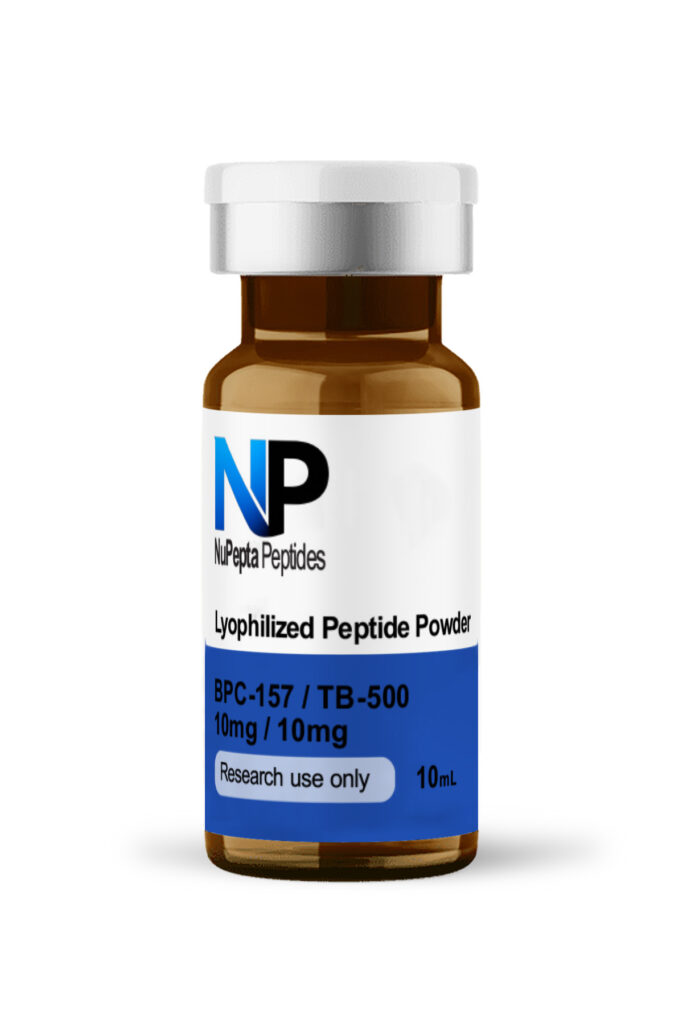
NuPepta’s BPC-157 / TB-500 — Research-Grade, USA-Made
At NuPepta, our BPC-157 / TB-500 combination is manufactured to the highest research standards:
- 99.9% purity specification, verified by rigorous HPLC testing
- Endotoxin-tested for sterility assurance
- Batch-specific Certificates of Analysis (COAs) — All lot numbers have documentation on our website.
- Truly made in the USA — vertically integrated from synthesis to packaging
- Available in nasal spray format via our proprietary Protixa ION™ System, delivering injection-level efficacy without needles
- Stable for at least one year under refrigerated storage conditions
Our 10mg / 10mg formulation is available for qualified research applications with no minimum order requirements.
Delivery Innovation: The Protixa ION™ System
Traditional peptide research has relied heavily on injectable formats. NuPepta’s Protixa ION™ System changes that equation. Our nasal spray delivery technology achieves injection-level bioavailability through a proprietary five-mechanism enhancement process — making BPC-157 / TB-500 research more accessible and consistent across laboratory settings.
Important Notice
All NuPepta products, including BPC-157 / TB-500, are strictly intended for research, laboratory, and educational use only. They are not intended for human or veterinary use. Researchers are responsible for compliance with all applicable laws and institutional guidelines.
Explore NuPepta’s full peptide catalog at nupepta.com